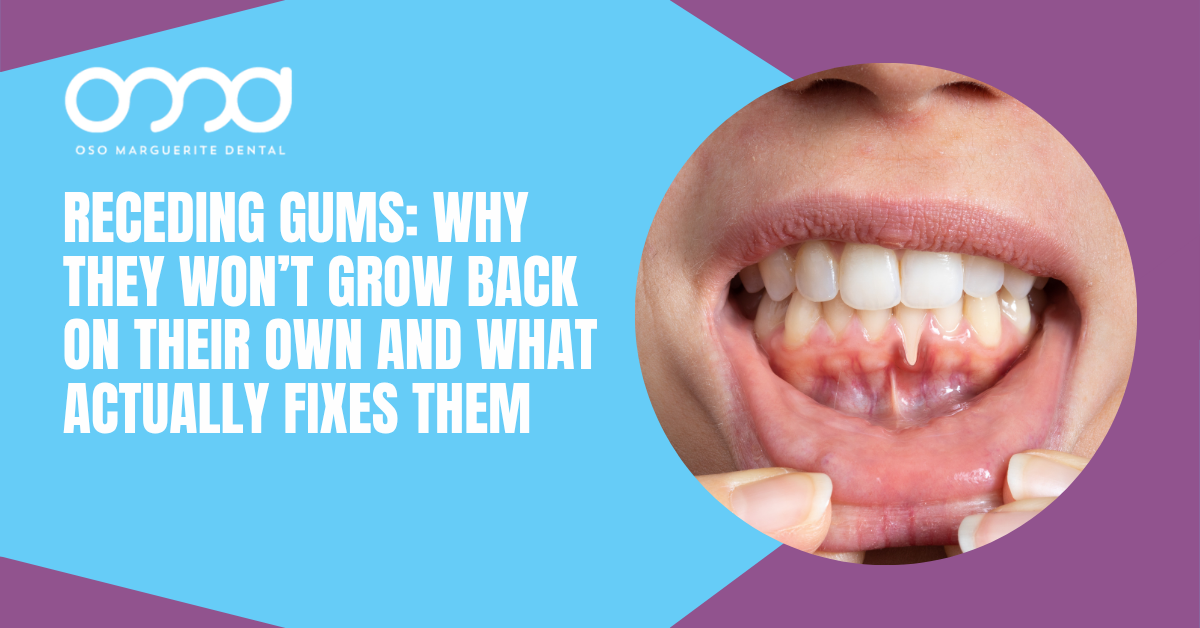
Noticing that your teeth look a little longer than they used to, or that your gum line seems to be creeping backward, is unsettling. It’s natural to wonder if it will just correct itself over time. Unfortunately, it won’t, and understanding why is the first step toward real receding gums treatment.
Gum tissue doesn’t regenerate the way skin does. Once it recedes, the tissue that’s gone stays gone unless a dentist intervenes. The good news is that modern treatment options can restore both the look and function of your gum line, often with less discomfort than people expect.
Gum Recession 101
• Receding gums treatment is necessary because gum tissue does not regrow on its own.
• Common causes include gum disease, aggressive brushing, and genetics.
• Early recession can often be managed without surgery.
• Advanced recession typically requires gum grafting to restore coverage.
• Left untreated, receding gums increase the risk of tooth sensitivity and bone loss.
Do Receding Gums Grow Back on Their Own?
This is the question almost every patient asks first, and the honest answer is no. Once gum tissue pulls away from the tooth, it doesn’t naturally regenerate. Unlike a cut on your skin, gum recession is a permanent structural change unless actively treated.
That doesn’t mean recession always gets worse immediately. In some cases, especially mild recession caught early, the condition can be stabilized so it doesn’t progress further, even without full restoration of the lost tissue.
What Causes Gums to Recede
A few common culprits show up again and again:
• Gum disease: bacterial infection breaks down the tissue and bone supporting your teeth.
• Aggressive brushing: brushing too hard, especially with a firm-bristled brush, wears away gum tissue over time.
• Genetics: some patients are simply predisposed to thinner gum tissue that recedes more easily.
• Teeth grinding: excessive pressure on teeth can contribute to gum and bone loss.
• Tobacco use: smoking is strongly linked to gum recession and slower healing.

Signs Your Gums Are Receding
Recession often develops slowly, which is part of why it’s easy to miss early on. Watch for:
• Teeth appearing longer than they used to
• Increased sensitivity to hot or cold near the gum line
• Visible notches or grooves near the base of a tooth
• Gums that look uneven from one tooth to the next
Treatment Options That Actually Work
Receding gums treatment depends heavily on how advanced the recession is. Mild cases are often managed with a deep cleaning to remove bacteria and plaque buildup, along with changes to brushing technique to prevent further damage.
More advanced recession usually requires restoring the lost tissue directly. That’s where gum grafting in Mission Viejo comes in. This procedure uses tissue, either from elsewhere in your mouth or a donor source, to rebuild coverage over the exposed tooth root, protecting it and improving both comfort and appearance.
Why Catching It Early Matters
The earlier receding gums treatment starts, the more conservative the options tend to be. Left untreated, recession exposes the tooth root, which is far more sensitive and prone to decay than the crown of the tooth. Continued recession can also lead to bone loss around the tooth, eventually threatening its stability.
Protect Your Smile Before Recession Progresses
Receding gums won’t reverse themselves, but they also don’t have to keep getting worse. Getting evaluated early gives you access to gentler treatment options and protects your teeth from the sensitivity and risk that come with advanced recession.
Oso Marguerite Dental is located at 26932 Oso Pkwy, #280, Mission Viejo, CA, 92691. Call (949) 682-3535 to schedule an evaluation and find out which treatment path fits your gum health.
References
1. American Dental Association
2. American Academy of Periodontology
3. Mayo Clinic
4. National Library of Medicine (PubMed)

