Gum disease rarely announces itself loudly. There’s no sudden pain, no obvious injury, no moment where you know something has gone wrong. It moves quietly. Gums bleed a little when you brush and you make a mental note to floss more. The bleeding stops, you move on, and the disease continues to progress underneath the gumline where you can’t see or feel it. By the time gum disease becomes impossible to ignore, meaningful damage has often already occurred. This post is direct about what that damage looks like and why gum disease treatment in Mission Viejo is worth pursuing well before the situation becomes serious.
Key Takeaways
• Gum disease progresses in stages from gingivitis to periodontitis, with each stage causing more irreversible damage.
• Untreated gum disease is the leading cause of tooth loss in adults, not cavities.
• Research consistently links periodontitis to cardiovascular disease, diabetes complications, and adverse pregnancy outcomes.
• Scaling and root planing is a non-surgical first-line treatment that halts progression in most cases when caught in time.
• Oso Marguerite Dental in Mission Viejo, CA provides gum disease treatment tailored to the severity of your condition.
What Gum Disease Actually Is
Gum disease is a bacterial infection of the tissues that support the teeth. It begins with plaque, the sticky film of bacteria that forms on teeth when they aren’t cleaned consistently. When plaque is not removed, it hardens into tartar and begins to irritate the gum tissue. The gums respond by becoming inflamed.
This early stage is called gingivitis. It’s reversible with professional cleaning and improved home care. But when left untreated, gingivitis advances to periodontitis, a deeper infection that destroys the bone and connective tissue holding teeth in place. At this stage, the damage is permanent. The goal of gum disease treatment shifts from reversal to management and preservation.
The distinction matters. Gingivitis is a warning. Periodontitis is a crisis in slow motion.
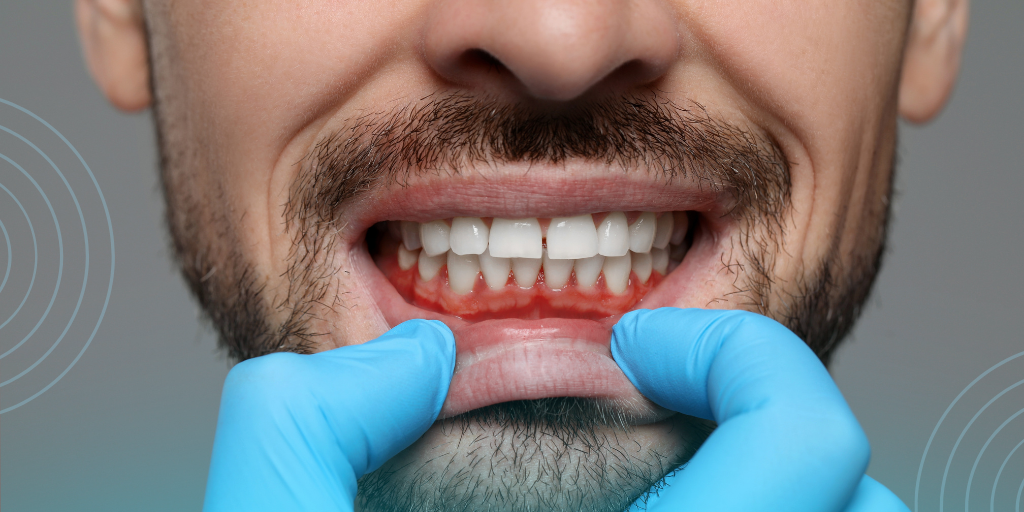
The Stages of Gum Disease and What Changes at Each One
Stage 1 (Gingivitis): Gums are red, puffy, and bleed when brushed. No bone loss has occurred yet. Fully reversible with professional cleaning.
Stage 2 (Mild Periodontitis): Pockets have formed between the gum and tooth root where bacteria accumulate. Early bone loss is detectable on X-rays. Professional treatment is required.
Stage 3 (Moderate Periodontitis): Pockets deepen. Bone loss increases. Teeth may begin to shift or feel loose. Gum recession becomes visible.
Stage 4 (Severe Periodontitis): Significant bone destruction. Multiple teeth are at high risk of loss. Complex treatment including surgery may be required to stabilize the situation.
Consequences Beyond the Mouth
The consequences of untreated gum disease don’t stop at the gumline. The oral-systemic connection is well-established in research, and periodontitis has been linked to conditions that affect the entire body:
• Cardiovascular disease: The bacteria associated with periodontitis can enter the bloodstream and contribute to arterial inflammation
• Type 2 diabetes: Gum disease makes blood sugar harder to control, and uncontrolled blood sugar worsens gum disease in return
• Respiratory infections: Bacteria from the mouth can be inhaled into the lungs, contributing to conditions like pneumonia
• Adverse pregnancy outcomes: Periodontitis in pregnancy has been associated with preterm birth and low birth weight
• Cognitive decline: Emerging research suggests links between chronic oral inflammation and increased dementia risk
These aren’t distant possibilities. They’re documented patterns in peer-reviewed research. Treating gum disease is an investment in overall health, not just oral health.
What Scaling and Root Planing Actually Involves
When gum disease has progressed beyond gingivitis, scaling and root planing is typically the first line of non-surgical treatment. The procedure is performed under local anesthesia and involves two components.
Scaling removes tartar and bacterial deposits from both above and below the gumline, including inside the pockets that have formed around tooth roots. Root planing smooths the root surfaces themselves, which reduces the rough areas where bacteria tend to cling and makes it harder for new deposits to accumulate.
Most patients require two appointments to complete the full mouth, with one half treated per visit. Mild soreness and sensitivity in the days following treatment is normal. The gum tissue begins to tighten and reattach to the roots as healing progresses.
Scaling and root planing doesn’t reverse bone loss that has already occurred, but it stops the progression. For many patients, it’s the difference between keeping their teeth and losing them.
How to Prevent Gum Disease From Progressing
Prevention at any stage is more effective than treatment after damage has occurred:
• Brush thoroughly along the gumline twice daily, not just across tooth surfaces
• Floss every day to disrupt the bacterial colonies that form between teeth and beneath the gum margin
• Use an antibacterial rinse if your dentist recommends it for your level of risk
• Schedule professional cleanings every six months, or every three to four months if you have a history of gum disease
• Quit smoking, which significantly suppresses the immune response in gum tissue and accelerates bone loss
• Manage systemic conditions like diabetes in coordination with your physician, as they directly influence gum health
When Gum Disease Requires Immediate Attention
Come in to see the team at Oso Marguerite Dental in Mission Viejo, CA without delay if you notice:
• Gums that bleed every time you brush, regardless of how gently you do it
• Persistent bad breath that doesn’t resolve with brushing and rinsing
• Gums that appear to be pulling away from the teeth, making them look longer
• Teeth that feel loose or have visibly shifted position
• Pus or discharge between the teeth and gums
• Any tooth that feels different when you bite down
These symptoms don’t stabilize without intervention. The longer gum disease goes untreated, the fewer options remain for preserving the affected teeth.
The Cost of Waiting Is Higher Than the Cost of Treatment
Every stage of gum disease that passes without treatment narrows the range of what’s possible. Gingivitis is a cleaning appointment. Advanced periodontitis may require surgery, bone grafts, or extractions. The gap between those two outcomes is determined largely by how quickly a patient acts.
Oso Marguerite Dental is located at 26932 Oso Pkwy, Suite 280, in Mission Viejo, CA, near the Oso Parkway and Marguerite Parkway intersection, close to Saddleback Memorial Medical Center and Mission Viejo High School. The team provides gum disease treatment scaled to each patient’s current condition and long-term goals.
Call now at (949) 682-3535 or contact us online to schedule your periodontal evaluation. Learn more about gum disease treatment at Oso Marguerite Dental in Mission Viejo, CA.
References
1. American Academy of Periodontology: Gum Disease Information
3. PubMed: Systemic Effects of Periodontal Disease


